I recently saw a job posting that contained, nestled within its list of basic qualifications, the very rejection letter it would send out later. The system had rejected you before you even had a chance to apply. It’s easy to laugh this off as a simple copy-paste error, but I think it’s more than that.
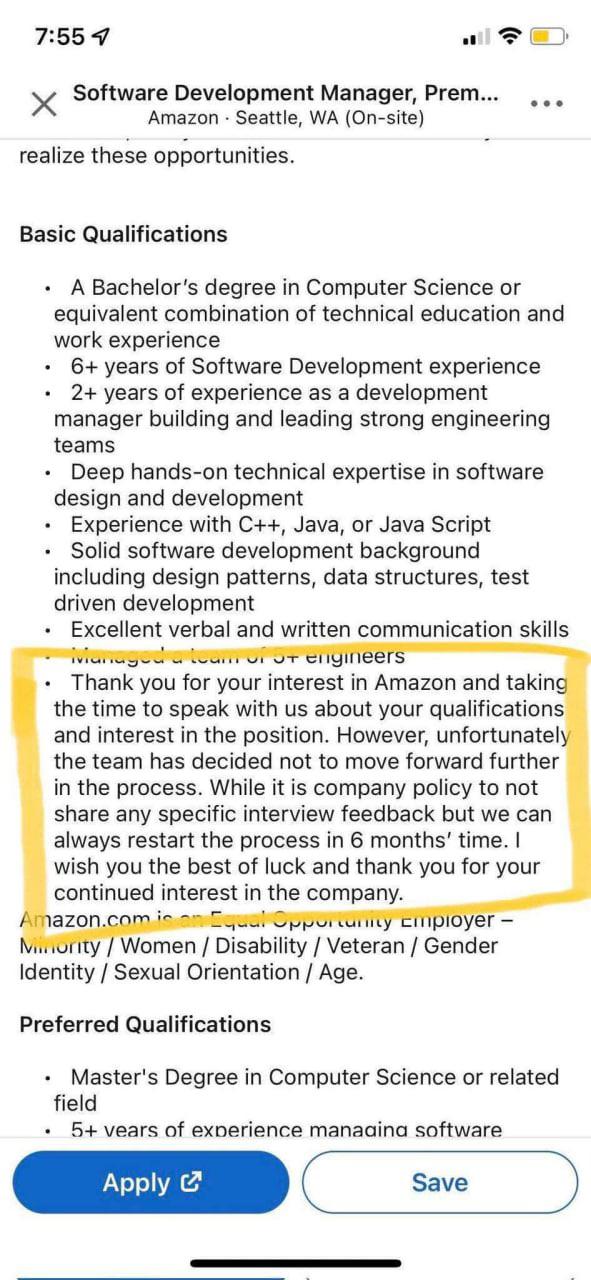
This isn't just about a failure in training or a faulty automation script, though it's likely both. It’s a symptom of a process where the human interface the simple act of checking one's own work has been lost. [span_1](start_span)A Reddit user commenting on the post noted that the recruiter's job description likely didn't include "attention to detail"[span_1](end_span). The job is no longer to be a thoughtful gatekeeper, but merely to operate the gate, even if it’s slamming shut on people before they’ve even approached.
A colleague once said that if our product were a car, I’d be taking an angle grinder to the back seats to question if the spoiler was worth it. When I look at the hiring process, I see a system bolted with unnecessary spoilers and so much complexity that it’s become absurd. We have CVs, automated forms, one-way AI-driven video interviews all designed to filter people out. [span_2](start_span)[span_3](start_span)As one commenter put it, Amazon's HR department seems to implement "a billion hoops to jump through"[span_2](end_span)[span_3](end_span). I understand the need for efficiency, but we seem to have optimised the humanity right out of the equation.
On top of this, there's the emerging phenomenon of "Ghost Jobs" adverts for positions that don't actually exist. They are posted to give the illusion of growth or to harvest CVs. [span_4](start_span)As one person noted, "There’s NO labour shortage just a ton of fake job posts"[span_4](end_span). So now, not only do you navigate a gauntlet of automated filters, but you might be applying for a job that is, itself, a ghost.
It seems the role of a "human interface" is no longer in the job description for those doing the hiring. The irony is that putting in the effort to treat people with respect and attention isn’t just a moral imperative; it’s good practice. It's an example of what adventurers call 'Type 2 Fun' .
Type 2 Fun: The kind of activity that is miserable while it's happening, but becomes fun in retrospect. Think of a gruelling hike up a big hill in the rain. The process can be unenjoyable, but the sense of accomplishment and the memory become a source of pride and even pleasure.[span_5](start_span)
Engaging with candidates directly, giving thoughtful feedback as another commenter pointed out, Amazon's policy is to *not* share interview feedback[span_5](end_span) and ensuring the process is respectful might feel like a slog. It’s certainly harder than letting a system send a pre-emptive rejection. But afterwards, the outcome is better for everyone. You build goodwill, you find the right people, and you remember that the goal of all this technology should be to connect people, not to build elegant, automated walls between them.